Saturday, July 24, 2010
Ron Paul on Money and Credit
Ron Paul :"The growth in money and credit has outpaced both savings and economic growth. These inflationary pressures have been concentrated in asset prices, not consumer price inflation--keeping monetary policy too easy. This increase in asset prices has fueled domestic borrowing and spending. Government policy and the increase in securitization are largely responsible for this bubble. In addition to loose monetary policies by the Federal Reserve, government-sponsored enterprises Fannie Mae and Freddie Mac have contributed to the problem. The fourfold increases in their balance sheets from 1997 to 1998 boosted new home borrowings to more than $1.5 trillion in 1998, two-thirds of which were refinances which put an extra $15,000 in the pockets of consumers on average--and reduce risk for individual institutions while increasing risk for the system as a whole. "

Friday, July 23, 2010
Wednesday, July 21, 2010
Connecting job seekers with the wool industry - new strategy dealing with skills shortage
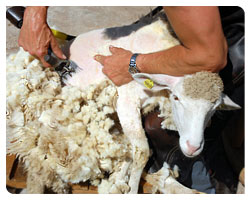
After two weeks of hard work, five clients from Queensland's St George branch of Mission Australia Employment Solutions (ES) have found a new opportunity for sustainable employment.
The clients were part of a program with the simple goal of connecting them with industries experiencing a shortage of skilled workers.
After consulting Ian Bateman of the Cashel Vale wool station at Bollon, Queensland, ES employment advisor Petra Stride realised an opportunity for job seekers.
Australia's shearers and wool classers are an ageing population. Combined with a shortage of new qualified workers entering the industry, wool stations are experiencing significant skills shortages.
"This wool handling course is a stepping stone which can be taken further with wool classing training and other upskilling" Petra said recently.
"I'm ecstatic about the enthusiasm shown. It is rewarding to see that the efforts gone into organising this course has had positive outcomes."
The clients thrived on the hard work, the healthy competition between shearers and the opportunity for long term employment in the country.
"This is my first time in the shed. I've been an office girl, but will now start a career in the wool handling industry. We've been told you get to see a lot of the country." said one trainee.
Another St George client demonstrated such a prowess with the shears that he has been invited by Mr Bateman to compete in the Longreach Diamond Shears competition. He's been learning to muster sheep with motorbikes on the property and finds the whole experience "refreshing".
Trainer Mick Nancarrow is thrilled at his trainee's progress "They have been a top class. They're keen and I'm excited about them going into the industry"
The trainees will attain a Certificate II in Wool Handling and have already been placed in the industry for 150 hours of training. Once complete they will be ready for full time employment in the industry.
Visit www.missionaustralia.com.au/pathways-sustainable-employment for more information on our ES programs
Tuesday, July 20, 2010
Media Release: Concern at growing numbers of homeless people turned away

The data, released this morning by the Australian Institute of Health and Welfare, show that of people needing new and immediate accommodation every day in 2008-09, 62% were unable to be placed.
The AIHW's report also states the group most likely to be turned away were families with an average of 80% of couples with children, 75% of couples without children and 69% of individuals with children who requested new and immediate accommodation turned away each day, compared with 50% of individuals without children.
Mission Australia's Chief Executive, Toby Hall, said the knowledge that the majority were family groups - who would have ended up sleeping rough, in cars, or in other dangerous situations - was cause for significant alarm.
"These figures are one more indication that over decades our country's approach towards helping people out of homelessness has been a failure," said Mr Hall."These numbers - and the tragic individual stories behind them - are shameful. Any level of homelessness in Australia is unacceptable.
"For our society not have the capacity to meet the demand of homeless families is an indictment on our collective values and priorities.
"We also need to recognise that these figures only tell part of the story. For every person fronting up at one of these government-funded services for help there'd be hundreds of others who chose not to - the 'hidden homeless'. I'm thinking of young people couch-surfing temporarily with friends or extended family. Those people don't get counted in this research.
"Knowing this data collection also took place a significant time ago is another reality check. Anecdotally we've seen a significant increase in individuals and families either homeless or at risk of homelessness over the past 18 months.
"Thankfully, we have seen concerted action on behalf of federal and state governments over the past year in regards to tackling homelessness and its many causes - measures that are aimed not only at addressing accommodation capacity but also to cut the flow of people into homelessness and to try and get them on their feet more quickly once they're there.
"But what these figures show us is that homelessness is a problem that's not going to be fixed overnight. It's a reminder that we need to work harder, better and more effectively if we're going to get on top of the problem," said Mr Hall.
Media contact: Paul Andrews (02) 9219 2080 or 0409 665 495
Monday, July 19, 2010
Mission Australia releases new report: 'Insights into the concerns of young Australians'

'Insights into the concerns of young Australians: Making sense of the numbers' is a new report released today by Mission Australia's Research & Social Policy unit.
In 2009 Mission Australia conducted its eighth annual National Survey of Young Australians, the largest of it's kind in Australia.
The survey asked young people aged 11 to 24 years about what they value, their concerns, where they go for advice and support and who they admire.
The new report sheds light on what the 48,000 young Australians surveyed are most concerned about. To provide a snapshot, these issues were provided by respondents as their greatest concern:
- Drugs (26.8% of respondents)
- Suicide (26.3%)
- Body image (25.5%)
- Family conflict (24.1%)
- Bullying/emotional abuse (23.4%)
- Alcohol (23.0%)
- Physical/sexual abuse (22.7%)
- Personal safety (22.2%)
- Coping with stress (18.7%)
- Depression (18.7%)
- School or study problems (17.3%)
- The environment (16.7%)
- Self harm (13.3%)
- Discrimination (11.7%)
- Sexuality - relationships, health, identity (11.4%)
Click here to view the report online or download a PDF version from this link
The 2010 National Survey of Young Australians has almost come to a close. Northern Territorians are still able to have their say until the 30th July - Click here to participate in the 2010 survey
Our national right to regulate our demographic composition
"The right of any nation ... to regulate its demographic composition should be considered as sacred by any liberal-minded man."
- Don Salvador de Madariaga, The Times, October 1964
- Don Salvador de Madariaga, The Times, October 1964
When There is No Rule of Law
Congressman Paul's Texas Straight Talk
“Last week ended with some promising news on finally stopping the oil spill in the Gulf of Mexico. Unfortunately, the administration still seems to believe that shutting down working oil wells is a higher priority than effectively dealing with the broken one. They are again issuing a moratorium on off-shore drilling, while maintaining a de facto ban on new permits even for shallow water drilling, which they previously stated would be unaffected. The courts have twice declared this unconstitutional, over 70% of the people see this as unreasonable, yet the administration seems determined to simply end off-shore drilling, at least for those producers that cannot afford to sit idle for an unknown period of time until the ban is lifted…”
Click here to read the full article: http://www.house.gov/htbin/blog_inc?BLOG,tx14_paul,blog,999,All,Item%20not%20found,ID=100719_3723,TEMPLATE=postingdetail.shtml
Subscribe to:
Posts (Atom)